
Note concerning the publication date of BfR2GO
BfR2GO 1/2026 was released in June 2026. The next issue will be published in December 2026. Internal Link:Subscribe
Food safety in times of (climate) change

Listen to the article:
Global warming with all its effects poses a threat to the environment, animals, plants – and to human health, by increasing the risk of foodborne diseases. An overview.
Heatwaves, fires, heavy rains, floods, rising sea levels – climate change is impacting nature and society in ways that are impossible to ignore.
However, it also has effects on a smaller scale. Microorganisms such as bacteria and parasites and toxins (poisonous substances) along with their prevalence in food are influenced by temperature, rainfall, and humidity.
These can seriously harm human health.
Favourable warmth for pathogens
Higher external temperatures increase the likelihood of livestock carrying certain zoonotic pathogens, which are pathogenic microorganisms that can be transmitted between animals and humans. The reason is that the microorganisms have better survival conditions in the environment and insects and rodents transmit them more easily. Furthermore, pathogens may reproduce faster in perishable foods, especially in case of improper storage outdoors, for example during barbecues or picnics, or in warm kitchens (due to higher temperatures) without refrigeration. In Germany, most foodborne infections with Salmonella or Campylobacter are reported in the summer months. They are often accompanied by diarrhoea and abdominal pain.
With respect to parasites, climate change may particularly favour infections with single-cell parasites, known as protozoa, which are already very stable in the environment. Protozoa include Cryptosporidium and Giardia. Infections are usually asymptomatic or are accompanied by gastrointestinal symptoms.
For people with impaired or not fully developed immune systems, however, these diseases can be more severe and in individual cases may even be life-threatening. Hygienic handling of food during transport, storage, and preparation in the kitchen can usually prevent infections (see More information).
The German Federal Institute for Risk Assessment (BfRshort forGerman Federal Institute for Risk Assessment) also studies how pathogens adapt to changing climatic conditions. For instance, a long-term project is examining the prevalence of various pathogens in relation to geographical location and their related environmental factors such as temperature and humidity.
Don't just spoil appetite: vibrio
Higher water temperatures also favour the growth of certain pathogens, such as Vibrio spp. The bacteria accumulate in seafood such as mussels and shrimps and reproduce particularly well in warm water (>18 °Cshort fordegrees Celsius).
If food containing Vibrio is eaten raw or insufficiently heated, mild to severe gastrointestinal infections may result.
For immunocompromised people, direct contact with water, for example when swimming, can also pose a risk – namely, when they become infected with the bacteria through small, unnoticed wounds. Blood poisoning with fatal consequences is possible.
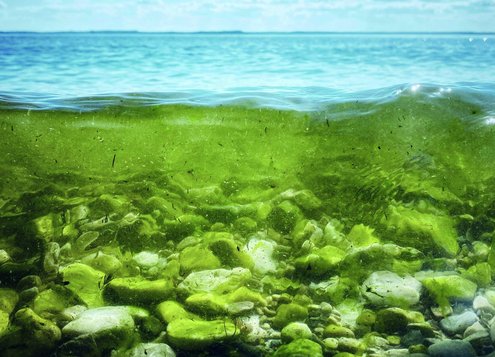
Vibrions like higher water temperatures. They accumulate in seafood and can lead to gastrointestinal infections.
Toxic in water and on land
Climate change also influences the occurrence and geographic distribution of toxins. This includes marine biotoxins – toxic substances produced by some algal species. These toxins can accumulate in the tissue of mussels and fish that feed on such algae, and in turn can cause various illnesses in humans after consumption. Symptoms can vary and range from diarrhoea, nausea, vomiting, and headache to amnesia and neurological disorders or even paralysis which can be fatal in rare cases. Due to an increase in water temperatures, toxinproducing warm-water algae can, e.g., spread towards the poles and occur in new areas where they were not previously reported.
Another example are moulds and the toxins they produce, which are known as mycotoxins. Climate change can affect the occurrence of moulds and thus the geographic distribution and prevalence of mycotoxins. They can be found in plant-based foods such as oil-rich seeds, nuts, grains, fruits, and vegetables, but also in animal food products such as dairy products. Even small amounts of mycotoxins can be harmful to health. The effect depends on the specific toxin, the duration of exposure (acute or chronic), the amount of intake, and the health condition of the individual consumer.
The European Commission has set limits for marine biotoxins as well as maximum levels for certain mycotoxins in various foods.