
Note concerning the publication date of BfR2GO

The new issue BfR2GO 1/2026 will be released end of June 2026. Internal Link:Subscribe for free. 

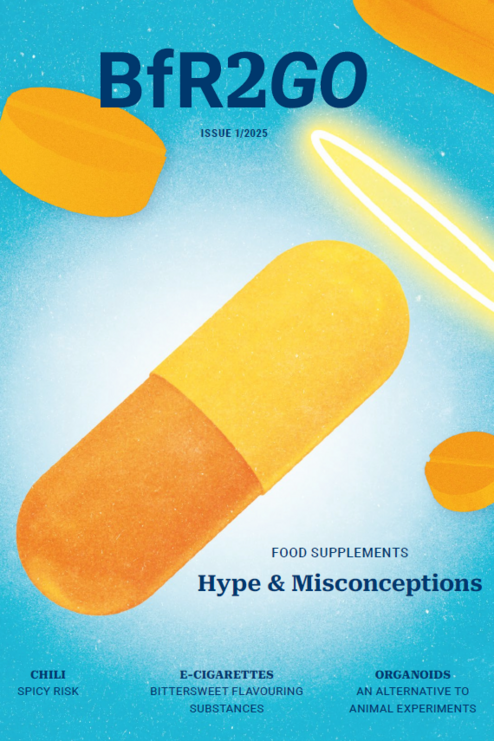
BfR2GO - Issue 1/2025 - Food supplements

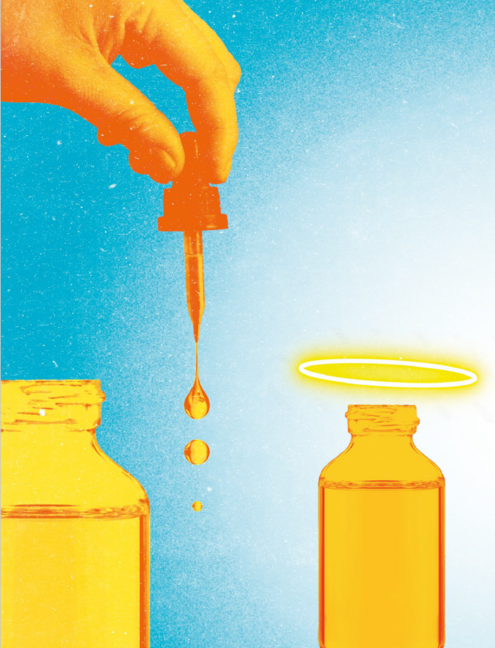
Hand holding a pipette from which liquid is dripping, small open containers next to it
Copyright Bottle: Krafla, Schein: Shadowstar / adobestock, Hand: Karsten Winegeart/unsplash

Between hype and miconception Food supplements fact check

Hand holding a pipette from which liquid is dripping, small open containers next to it
Copyright Bottle: Krafla, Schein: Shadowstar / adobestock, Hand: Karsten Winegeart/unsplash

Do you take food supplements? Perhaps vitamin D during the winter? Or magnesium after working out? Maybe St John’s wort to lift your mood? If so, you’re part of the majority. In a recent survey conducted by the German Federal Institute for Risk Assessment (BfRshort forGerman Federal Institute for Risk Assessment), more than two thirds of respondents reported taking a food supplement within the last 12 months.

In this issue

Dr. Tewes Tralau
Copyright BfRshort forGerman Federal Institute for Risk Assessment

Dear readers

As the new Vice-President of the BfRshort forGerman Federal Institute for Risk Assessment, I am delighted to present the current issue of our BfR2GO science magazine to you. The main focus of this issue is on the topic of food supplements and the widespread misconceptions about them within the general population. One of the most common assumptions is that food supplements are freely available (and officially tested) medical drugs.

This misconception is the reason that supermarket and pharmacy shelves are stocked full of pills and powders containing vitamins and minerals. However, people eating a balanced diet can typically do without these “supplements”.

Of course, science is not free from misunderstandings either. “Why Most Published Research Findings Are False” – this provocatively-titled study, published by medical researcher John Ioannidis from Stanford University 20 years ago, laid bare the technical issues prevailing among scientific studies. Since then, a lot has improved, as Ioannidis says in the interview. Learning from past mistakes is a way to contribute to scientific progress. And progress is something you will find in many topics covered by the BfRshort forGerman Federal Institute for Risk Assessment, including barbecuing, spicy foods, replacing animal experiments with miniature organs, and a whole lot more in the pages of this magazine.

I wish you an intellectually nourishing read!

Dr Tewes Tralau
BfRshort forGerman Federal Institute for Risk Assessment Vice-President
Articles of the current issue

Current issue's highlights

  • melon in the sun
    Copyright Scott Webb/unsplash

    Food safety in times of (climate)change

    Global warming with all its effects poses a threat to the environment, animals, plants – and to human health, by increasing the risk of foodborne diseases. An overview.

  • period products
    Copyright Blood: Amir, other: Morena @adobestock

    (No) reason to sea red

    Metals, pesticides, biocides: news proclaiming the discovery of hazardous substances in period products make the rounds every so often. What risks might tampons and other period products pose?

Never miss an issue

The BfRshort forGerman Federal Institute for Risk Assessment science magazine BfR2GO is published twice a year. Subscribe for free.

More issues