Note concerning the publication date of BfR2GO
BfR2GO 1/2026 was released in June 2026. The next issue will be published in December 2026. Internal Link:Subscribe
Too much for the liver
Listen to the article:
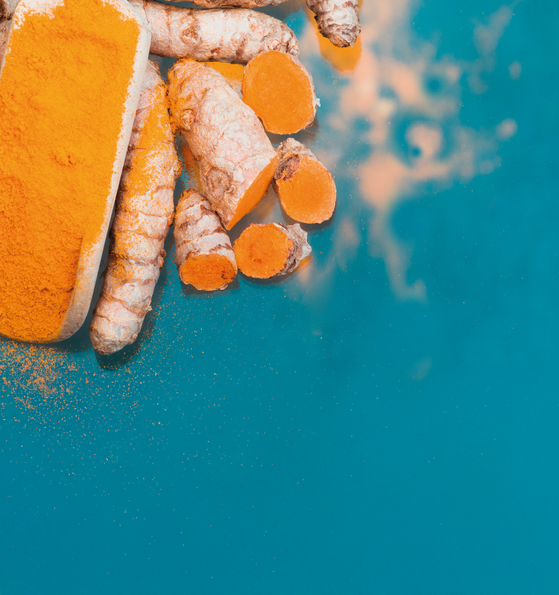
Preparations made from certain yellow root plants (turmeric) have been used as a spice for thousands of years. One of turmeric’s ingredients can, however, be problematic for health. The plant substance is also a popular colourant for margarine, pastries,
The dried, pulverised root rhizomes of turmeric are traditionally used as a spice for dishes in Indian and Asian cuisine. Preparations based on turmeric are a main part of curry and lend the spice mix a particular yellow colour due to the ingredient curcumin.
Therapeutic effects, such as tumour preventing properties, are sometimes attributed to turmeric preparations. To date, there is a lack of sound scientific evidence from clinical studies as to the health benefits of such products. The supposed positive effects are up against the possible negative effects on health. A daily intake of curcumin of up to three milligrams per kilogram of body weight from all food sources is considered a total intake amount not associated with increased health risks. Curcumin is not considered harmful to health as a flavourant and colourant in food or as an additive in (pro- cessed) foodstuffs because the intake is limited. There are significantly higher curcumin amounts in certain food supplements.
Increased risk
Clinical studies, in which curcumin was in part administered in high doses, have revealed undesirable ef-fects, such as gastrointestinal issues (nausea, bloating or stomach irrita-tion). In addition, the consumption of certain food supplements containing curcumin has been associated with several cases of acute inflammation or damage to the liver – particularly in the case of preparations with “im- proved bioavailability”. The reason being that curcumin is not absorbed well by the organism. Substances such as piperine (from pepper) are meant to improve this. However, the use of such substances means that the negative effects, on the liver for example, might be enhanced. This is even true of smaller doses.
Due to data gaps, the German Federal Institute for Risk Assessment (BfRshort forGerman Federal Institute for Risk Assessment) sees a need for more research for such products in particular and recommends pregnant women, children and sensitive people not to consume them.
More information
Micronutrients and more
Which foods contain vitamins and essential minerals? Will I get sick if I consume too much or too little of them? Should I take food supplements to meet my body’s requirements, just in case? These types of questions are answered on www.microco.info/ en/vitamine-homepage.html, the information portal of the German Federal Institute for Risk Assessment (BfRshort forGerman Federal Institute for Risk Assessment). It provides information about micronutrients – vitamins and minerals – and explains their purpose in our bodies. There are also introductions to countless other substances which can be found in food supplements and enriched foods.
Check it out at: External Link:microco.info