Note concerning the publication date of BfR2GO
BfR2GO 1/2026 was released in June 2026. The next issue will be published in December 2026. Internal Link:Subscribe
Burning ambition
Listen to the article:
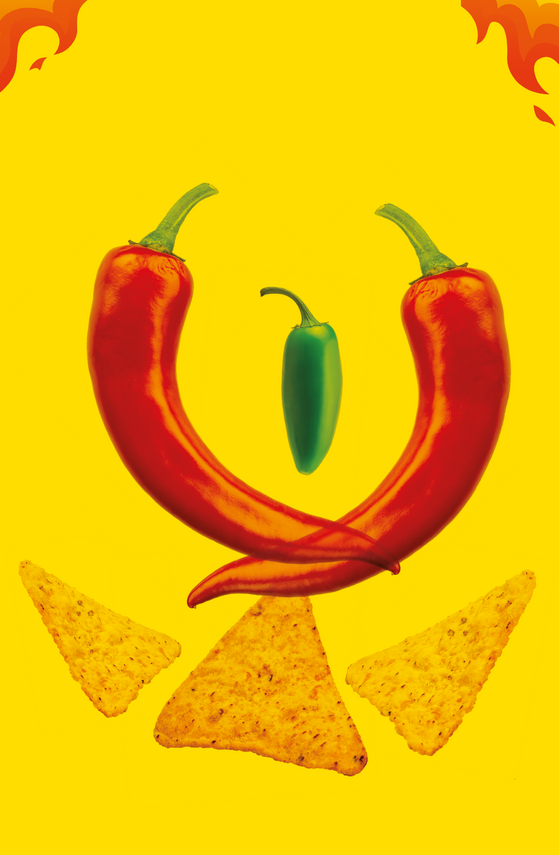
Spicy plant substances are actually supposed to keep other organisms away. But some creatures, such as humans, expose themselves to spicy “chili” ingredients on purpose.
Hotter and hotter. Round after round. To the sound of applause. This is how chili contests are held, competitions where participants test the limits of their taste buds as well as their pain tolerance. And though, as the contest progresses, more and more people bow out, the toughest among them do their best to keep going, wheezing, sweating, and grimacing all the way. And all for the sake of breaking the next Scoville record.
In 1912, pharmacologist Wilbur L. Scoville developed the internationally renowned and frequently cited unit of pungency, which also indicates the amount of capsaicin present. This spicy substance is produced by chili plants. These capsaicinoids belong to the alkaloid group and serve as a de- fence mechanism against predators also in other bell pepper species.
Challenge for the circulatory system
This taste challenge was also the motivation behind the “hot chip challenge”. But very few were burning to see the ambulance that arrived after they ate a small tortilla chip seasoned with capsaicin and soon began feeling the physical symptoms. A while ago, this snack gained prominence among children and adolescents in many countries, particularly due to videos on social media. From a scientific perspective, when capsaicin and related substances bind to certain receptors, they cause a heat and pain sensation which is perceived as pungency. The tolerance to this oral sensation varies from person to person. Following intake, the plant ingredient can cause a burning sensation in the (upper) gastrointestinal region, acid reflux, nausea, vomiting, and pain in the abdominal and chest regions. After intake of high amounts, circulatory issues may occur: cold sweat sets in, blood pressure changes occur, people begin feeling dizzy.
Burning boundaries
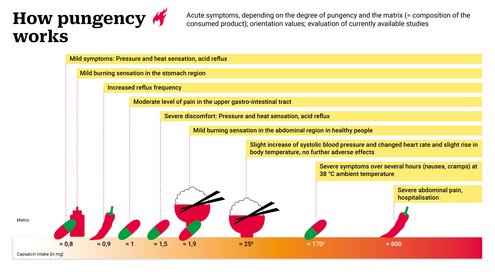
Children are particularly sensitive to hot chili products. The international scientific literature has reported severe poisoning cases and undesirable effects. Mild impairments have been reported following intake amounts of 0.5 to 1 milligram (mgshort formilligram) and severe impairments were seen for amounts around 170 mgshort formilligram. It is not possible to provide more specific information. This is particularly because the perception of “pungency” is subjective and also the type of meal influences how well an amount of capsaicin is tolerated. For instance, a meal consumed in a normal amount of time and consisting of several components is often perceived as less spicy than the same amount of capsaicin in a single small tortilla chip. There are currently no maximum legal levels for capsaicinoids in foodstuffs.
But there’s one tip that always works: capsaicinoids are fat-soluble. This means that, instead of water, milk or fatty plant drinks made from soy or almonds help to “extinguish” the burn. This strategy also provides some relief to the men and women who have surrendered in the Chili contest, and they should know.