Note concerning the publication date of BfR2GO

The new issue BfR2GO 1/2026 will be released end of June 2026. Internal Link:Subscribe for free. 

Message in a bottle

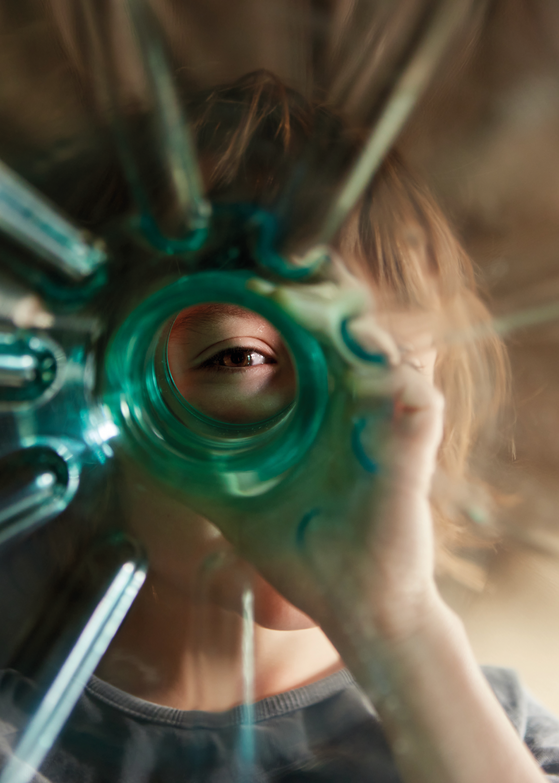
Person looking through the opening of a plastic bottle
Copyright Ekaterina Demidova / gettyimages
Listen to the article:

Enough to spoil your appetite: reports about microplastics, plasticisers etc. in drinks from PET bottles. What are the health risks of this plastic?

PET, recognisable by the three-pointed arrow symbol with the number 1 and short for polyethylene terephthalate, is mainly used for beverage bottles but also for other food packaging. 

Whether there is actually more than the desired drink lurking in the bottle – i.e. substances harmful to health that can transfer from the material into the drink – is a repeated topic of public debate.

Liquid hormones

At first glance, the suspicion that PET bottles could transfer hormone-like substances into the drinks appears to be not unfounded. Some studies showed a low oestrogen activity in mineral waters from PET bottles. However, the activity was approximately 10,000 times lower than the natural hormone-like effect of beverages such as milk, beer or red wine. Interesting: “A comparison of mineral waters from PET and glass bottles showed no difference in the measured oestrogenic activity. Therefore, there is no reason to assume that this activity is caused by the PET bottles,” says Dr Thomas Tietz, who deals with the safety of food contact material at the German Federal Institute for Risk Assessment (BfRshort forGerman Federal Institute for Risk Assessment).

Plasticisers or BPA in PET?

Icon PET-bottle and PET-cup
Copyright BfRshort forGerman Federal Institute for Risk Assessment

Phthalates and other plasticisers come to mind when plastics are discussed. Some of them also have hormone-like effects, but they are not used in the manufacture of PET bottles. Small traces of these substances could certainly be introduced, for example, as impurities during recycling or via the lid seals. However, in the investigated mineral waters, they were only, if at all, detected in concentrations far too low to explain the measured oestrogenic activities. 

Does the presence of PET mean BPA isn’t far? Drinking cups, plastic tableware, or the inner coating of food cans may contain the substance bisphenol A (BPA for short). It is often associated with various adverse health effects. BPA is also not used for the production of PET, but it has been detected in some recycled PET bottles. “The amounts were, however, far below the legally defined limit values and thus, according to current knowledge, do not pose a health risk,” says Tietz.

Small particles, small effects?

84% of consumers worry about microplastics in foods. This is demonstrated by a representative survey of the BfRshort forGerman Federal Institute for Risk Assessment from 2024. Several studies were able to detect plastic particles when investigating mineral waters, particularly in reusable bottles. Water from reusable glass bottles, however, showed similar levels to water from reusable PET bottles, which points to a contamination during the cleaning or refilling processes – for example when removing labels. The abrasion of the lids or ageing of the materials of reusable bottles could also be a source. According to the current knowledge, it is unlikely that microplastic particles in food pose any health risks.

Tipps

  • Hygienic handling of bottled drinks

    — Store already opened bottles closed and chilled.
    — Avoid drinking directly from the bottle or sharing with others.
    — If possible, drink immediately after opening the bottle – especially if you are drinking straight from the bottle.
    — Freshness tip: Pay attention to the “best before” date for waters in PET bottles (carbon dioxide can more easily escape PET bottles than glass bottles). 
Sweet aftertaste

What if the water tastes strange? Anyone who drinks mineral water out of PET bottles might have noticed a sweet and fruity taste – caused by acetaldehyde. Even very small amounts of it can be tasted or smelt. “The substance is created during the manufacture of PET and can transfer into the water due to technical defects. With small amounts, however, no health risk is to be expected,” explains Tietz. PET bottles only release very small amounts of acetaldehyde since a taste impairment of the water is legally not permissible. 

In summary: PET bottles do not contain hormone-like substances or plasticisers, BPA or microplastics in such quantities that could have a negative impact on health. This is also true of the occasional sweet and fruity taste of mineral water from PET bottles which is caused by acetaldehyde. Consumers can feel confident grabbing a bottle.

Current issue's highlights

  • melon in the sun
    Copyright Scott Webb/unsplash

    Food safety in times of (climate)change

    Global warming with all its effects poses a threat to the environment, animals, plants – and to human health, by increasing the risk of foodborne diseases. An overview.

  • period products
    Copyright Blood: Amir, other: Morena @adobestock

    (No) reason to sea red

    Metals, pesticides, biocides: news proclaiming the discovery of hazardous substances in period products make the rounds every so often. What risks might tampons and other period products pose?

Never miss an issue

The BfRshort forGerman Federal Institute for Risk Assessment science magazine BfR2GO is published twice a year. Subscribe for free.