Note concerning the publication date of BfR2GO
BfR2GO 1/2026 was released in June 2026. The next issue will be published in December 2026. Internal Link:Subscribe
More than just a sugar high
Listen to the article:
They look like regular sweets and promise relaxation and feelings of happiness – products with psychoactive substances. But consumption doesn’t always trigger positive effects.
They look like brownies, lollies, or fruit gums, but there is a major difference: these products contain psychoactive substances that have an intoxicating effect.
This effect can be traced back to ingredients such as the cannabinoid HHC (hexahydrocannabinol) from the hemp plant, or the fly agaric toxin muscimol. They are sold in online shops, vending machines, and kiosks.
Dangerous risk of confusion
In addition to deliberate consumption, there is also the risk that the products may be confused with regular sweets. "Especially for particularly sensitive groups such as children, this confusion can have serious health consequences,” says Dr Nina Glaser, who is involved in establishing the national poisoning registry at the German Federal Institute for Risk Assessment (BfRshort forGerman Federal Institute for Risk Assessment). “Under certain circumstances they may consume larger quantities than adults, who consume a specific dose for intoxication purposes.” They then run the risk of serious poisoning.
Europewide trend
In recent years, products with psychoactive substances from the hemp plant, above all HHC, have attracted particular attention. Products with HHC were first observed on the European market in 2022 and were marketed primarily as a “legal substitute” for cannabis or THC (tetrahydrocannabinol). From that point on, supply increased rapidly. By the end of that year, such products were already available in the majority of EU countries.
However, poisoning cases illustrated that the promised feelings of happiness were not the only possible effects of consumption. In the Czech Republic several children ended up in hospital after consuming sweetlike products containing HHC. Germany and France also recorded cases involving light to severe symptoms following consumption of products containing HHC.
“Since June 2024, HHC has been subject to Germany’s New Psychoactive Substances Act (NpSG). This means that a new psychoactive substance may not be manufactured or placed on the market,” says Professor Dr Bernd Schäfer, whose work at the BfRshort forGerman Federal Institute for Risk Assessment includes examining the health risks of plant substances. Other EU countries, including Denmark, Finland, France, Greece, Austria, Sweden, and the Czech Republic have now also regulated HHC products.
Benefits rather than risks?
HHC, THC – wasn’t there something else? CBD (short for cannabidiol) is also a cannabinoid from the hemp plant, however, it is not psychoactive. CBD products are primarily sold as “food supplements.” The manufacturers promise numerous effects that promote health, most of which are not scientifically proven. In the EU, however, such products are not considered marketable, as they are classified as novel foods that require authorisation from the European Commission before they can be marketed.
The number of products available that contain hemp seeds has also increased in recent years. They are used for edible oils and added to muesli bars, pasta, or protein powder. “The seeds contain important nutrients such as essential amino acids and fatty acids, but naturally no THC. During harvesting and processing, however, they can be contaminated through contact with parts of the hemp plant that contain THC,” Schäfer says. As long as appropriate measures are taken, the THC concentration can be kept low. Most hemp seed oils contain such low concentrations of THC that no health impairments are to be expected.
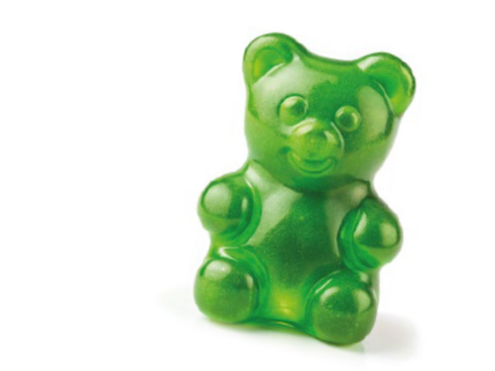
Consumption can lead to severe poisoning - especially in children
Fly agaric toxin in "wine gums"
In addition to the psychoactive cannabinoids in the hemp plant, there are also other natural substances with an intoxicating effect. “These include muscimol, found in the fly agaric mushroom,” says Glaser. Various food-like products with muscimol are available in shops. “Consuming these products can lead not only to intoxication, but also to considerable health impairments.” This claim is backed up by a case from the German Federal State Hessen, where a man had to be brought to hospital after consuming “wine gums” containing muscimol. In response to enquiries from the BfRshort forGerman Federal Institute for Risk Assessment, the German poison information centres reported several cases in which muscimol consumption resulted in symptoms ranging from confusion and disorientation to coma.
In order to obtain an overview of such poisoning cases throughout Germany, the BfRshort forGerman Federal Institute for Risk Assessment will launch the German national registry of poisonings in 2026. This registry will collect reports of poisoning from the poison centres of the German federal states (“Laender”), as well as from hospitals, doctors’ practices, and statutory accident insurance bodies, and make them available for evaluation.