81 %
of respondents have heard of UV filters in sun protection products as a health topic.
BfR2GO 1/2026 was released in June 2026. The next issue will be published in December 2026. Internal Link:Subscribe
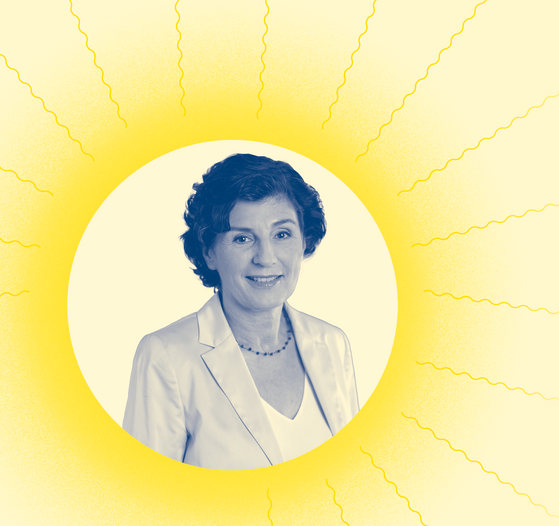
UV rays can cause skin cancer. Dr Inge Paulini, President of the German Federal Office for Radiation Protection (BfS), explains that while sunscreen offers protection, other measures are more important.
The climate. We know that this changes things including the cloud cover. The result is an increase in the number of hours of sunshine per year, the number of years with a lot of sun, and therefore UV radiation.
Clouds partially block or disperse UV rays. On an overcast day, very little radiation reaches us. But due to climate change, we are seeing an increase in days with a lot of sunshine and few clouds. Our behaviour has changed, too. On a sunny day people tend to spend more time outdoors and are thus more exposed to UV radiation. This increases the risk of skin cancer.
This is not necessarily only a question of the season. It is better to look at the UV index, which is stated in many weather apps and is a globally standardised scale indicating UV strength. It starts at 1 and there is no upper limit. We should start protecting our skin and eyes at level 3. Level 3 corresponds to a nice day in spring with a little sun. That is already sufficient to damage the skin. In January, too, for instance when skiing at higher elevation, one should think about appropriate UV protection.
Sunscreen application is the last step. The most important thing is to avoid being exposed to direct sunlight if possible. The more intense the sun, the more it should be avoided. If there is shade, people should seek it. The second step is to cover your skin: long sleeves, long trousers, a hat, sunglasses. Sunscreen is the third step.
For sun protection products, the higher the sun protection factor (SPF), the better the protection. It is important to apply enough sunscreen and to reapply it regularly. Otherwise, the UV protection does not fully work.
Sunscreen should be immediately reapplied after going into water. I would say it is advisable to apply it more frequently and use more of it than too little.
If people wish to sunbathe, then only in very small doses and not during the intense midday sunshine. People often spend time in the sun in order to get a tan. However, one should know that a tan is a protective mechanism of the skin cells to keep the UV radiation from doing even more damage. With that being said, a tan is actually already indicative of damage, it is a defence reaction by the skin. A tan is not a sign of health.
No, all that it does is increase your risk of skin cancer. The UV radiation in tanning beds is typically as strong as the sun at the equator – during midday when the sun is at its highest point. It doesn’t get much more intense than that.