Note concerning the publication date of BfR2GO
BfR2GO 1/2026 was released in June 2026. The next issue will be published in December 2026. Internal Link:Subscribe
HOLY (RAW) MILK
Listen to the article:
published
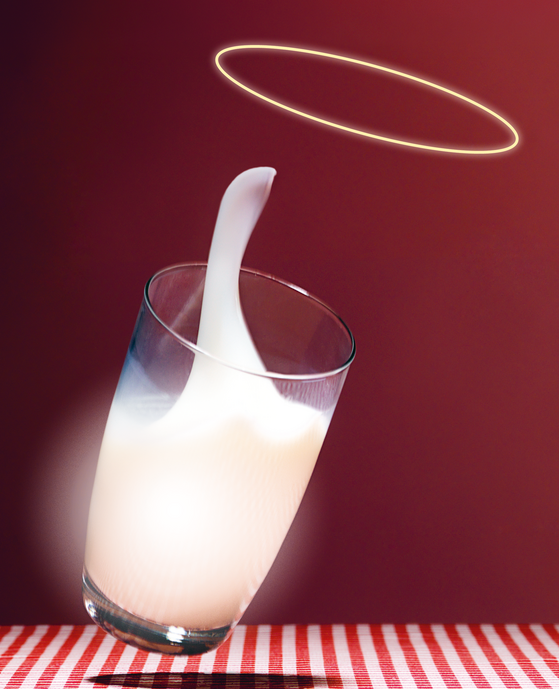
Raw milk is celebrated as a “superfood”, particularly on social media. Justified hype or a risky trend?
In the online world, raw milk is often extolled as a genuine health-booster packed with nutrients and beneficial bacteria. It can come from cows, sheep or goats and is sold to consumers untreated “direct from the farm” after milking, for example via socalled milk filling stations.
Raw milk is thus not homogenised or pasteurised before sale, unlike conventional fresh or UHT milk. This is precisely where raw milk enthusiasts see the problem: they claim that heat treatment would destroy all the beneficial ingredients. But is this really the case? And can raw milk really be enjoyed without hesitation?
HIDDEN RISK OF INFECTION
“Raw milk is a sensitive food,” explains Dr Anja Buschulte, a veterinary specialist in food safety at the German Federal Institute for Risk Assessment (BfRshort forGerman Federal Institute for Risk Assessment). “It can contain impurities from pathogenic bacteria such as Salmonella, Campylobacter or enterohaemorrhagic Escherichia coli (EHECshort forenterohemorrhagic Escherichia coli).” It is almost impossible to avoid milk containing bacteria – wether pathogenic or harmless. After all, dairy animals do not live in a sterile environment, but in the open air or in stables. Bacteria are naturally widespread there and can enter the milk during milking or processing. Furthermore, infected animals can excrete bacteria in their milk, even if they themselves do not appear visibly ill.
If a person drinks raw milk straight from the bottle, foodborne infection is possible. “This can be particularly risky for infants, young children or people with a weakened immune system, such as pregnant women or the elderly,” says Buschulte. But even healthy adults face an increased risk of foodborne infection, which can lead to mild to severe illness depending on the type of pathogen.
HEAT PROTECTS
The good news is that heat kills the bacteria. Vulnerable population groups should therefore generally boil raw milk before drinking it. Under current legislation, raw milk outlets must therefore be clearly labelled with the warning: “Raw milk – boil before consumption”.
The situation is different for what is known as certified raw milk – packaged raw milk from farms subject to particularly strict controls, which is also available in shops. “Strict regulations apply to its production and handling, such as enhanced microbiological testing of the milk,” explains BfRshort forGerman Federal Institute for Risk Assessment scientist Buschulte. “It can therefore be assumed that the probability of infection is reduced compared to raw milk from conventional farms.” However, for particularly vulnerable population groups, the BfRshort forGerman Federal Institute for Risk Assessment recommends heating even certified raw milk before consumption.
Good to know: Unpackaged raw milk may only be sold directly at the dairy farms. Sale to communal catering establishments such as canteens, hospital kitchens or catering facilities at schools and nurseries is not permitted. Nor may certified raw milk be used in communal catering without first being boiled.
UNTREATED = HEALTHIER?
Many of the supposed benefits of raw milk are either not scientifically proven or have been disproved, or, in the BfR’s view, they play at best a minor role in light of the health risks.
For example, pasteurisation of milk results in a slight reduction in B vitamins (approximately 10 %), but minerals and milk fats remain unchanged. These minor differences in vitamin content are insignificant for vitamin intake given the generally good nutrient supply in this country.
According to the current state of knowledge, the BfRshort forGerman Federal Institute for Risk Assessment is not aware of any adverse health effects of pasteurisation. Even though potentially pathogenic bacteria are killed, pasteurised milk remains a natural food rich in natural and beneficial ingredients.