Note concerning the publication date of BfR2GO

The new issue BfR2GO 1/2026 will be released end of June 2026. Internal Link:Subscribe for free. 

Category Food

Bacteria monitoring

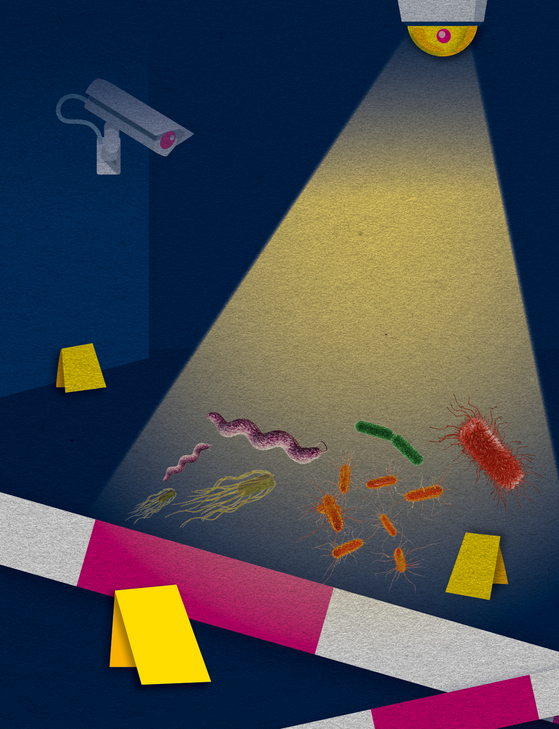
a crime scene: bacteria, warning tape, spot lights. Microorganisms in the spotlight
Copyright Bacteria: TUMEGGY/SCIENCE PHOTO LIBRARY ,KATERYNA KON/SCIENCE PHOTO LIBRARY, Love Employe, / gettyimages, CDC/James Archer
Listen to the article:

Genome analysis helps identify the source of foodborne infection. Real-time monitoring of potential pathogens is planned for the future.

Some foods would not exist without the presence of bacteria, including yoghurt and cheese. However, most germs are not desirable in foods. These include Salmonella, Campylobacter, and Listeria. They can cause illness and are particularly dangerous for small children, pregnant women, and sick or elderly people. Pathogens can spread quickly along production and distribution chains, leading to disease outbreaks in areas far apart from each other. 

If two or more people fall ill (likely) due to the same food or if corresponding illness cases are more frequent than expected, this is termed a foodborne disease outbreak.

Outbreaks are comparatively easy to identify when they occur in a single location, for instance following an event. If several people complain of nausea, vomiting, diarrhoea, and abdominal cramping, it is probable that a contaminated food is the cause. However, for individual illness cases occurring at different times in different parts of the country, it is far more difficult to identify the source.

LOOKING FOR A MATCH 

If an outbreak is suspected, it is important to identify the pathogen responsible for the infection as well as the contaminated food as fast as possible. This is no simple task, as became evident with the recent enterohaemorrhagic E. colishort forEscherichia coli (EHECshort forenterohemorrhagic Escherichia coli) outbreak which began in Mecklenburg- West Pomerania. The search for the source of infection included laboratory diagnostic research into the characterisation of the pathogens, in particular methods of full genome sequencing. Put simply, the genetic material of a pathogen is identified piece by piece. 

“We compare the genome sequences of pathogen isolates from food with those taken from sick people,” explains Dr Burkhard Malorny from the German Federal Institute for Risk Assessment (BfRshort forGerman Federal Institute for Risk Assessment). “If a match is found, i.e. if the sequences are identical or almost identical, this is often the first indication of the contaminated food. This allows us to further close in on the source of the disease outbreak.”

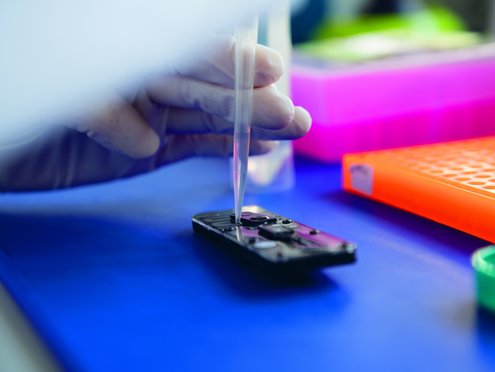
liquid being pipetted

Finding the food suspected of causing the disease outbreak involves laboratory diagnostic research into the characterisation of pathogens.


Copyright BfRshort forGerman Federal Institute for Risk Assessment

Only a few years ago, these methods were too complicated and expensive to be used in common research in government institutions and not just in high-level research. That has changed. “Today, around two thirds of the authorities responsible for food monitoring in the German federal states (“Laender”) use these methods,” says Malorny. Heshort forhelium heads the National Study Centre for Sequencing in Risk Assessment, which assists the states’ authorities in establishing use of these methods. 

Full genome sequencing has also become more prevalent in the National Reference Laboratories (NRLs) at the BfRshort forGerman Federal Institute for Risk Assessment, which regularly looks at pathogen isolates collected from food and feed, including from national monitoring and prevention programmes. With the help of the study centre, the NRLs were among the first institutions to scope out the potential of new genome analysis methods. Now, they use them for early detection of new pathogen variants and can estimate their illness-causing potential and their spread. “These methods are far more precise than the previous ones,” says Dr Sylvia Kleta from the NRL for Listeria monocytogenes.

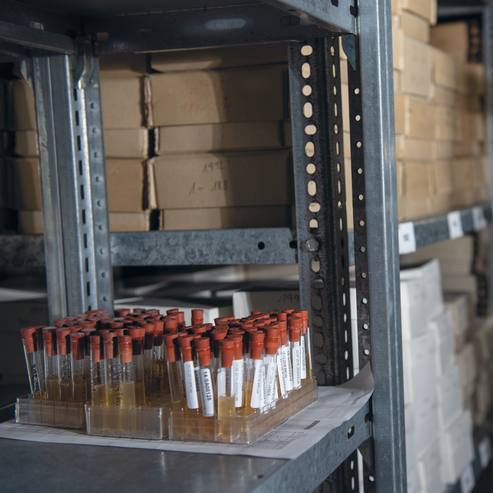
National Reference Laboratory at the BfR

Stahlregale mit zahlreichen Karton; in einem Regalfach stehen unzählige beschriftete Reagenzgläser mit einer gelblichen Flüssigkeit darin
Copyright BfRshort forGerman Federal Institute for Risk Assessment
  • Dormant treasures

    There’s a collectors’ craze happening at the National Reference Laboratory for Salmonella. Each individual Salmonella sample gathered and analysed by the BfRshort forGerman Federal Institute for Risk Assessment and its predecessors over the past decades is stored here. Maybe not forever, but certainly for the foreseeable future. The first samples are from way back in 1976. Initially, the isolates were kept – as can be seen here – in little cardboard boxes at room temperature, packed together on big shelves. However, the bacteria can slowly change over the years. For this reason, the laboratory began freezing new isolates at negative 80 degrees Celsius a few years ago. Since then, the storage rooms of the Reference Laboratory have been filled with big freezers. But why all the effort? The old samples can help answer current scientific questions. For example, they help uncover which properties of a certain Salmonella strain have changed over time or which antibiotic resistances were dominant among the strains in the 1970s. If necessary, the desired isolates can be dug out and the bacteria can be replicated and analysed. True dormant treasures!

TARGET: IDENTIFY THE SOURCE OF THE OUTBREAK 

The NRL for Salmonella has a high workload. It receives around 3,000 Salmonella isolates from food each year, both from public and from private laboratories and universities. The NRL for Listeria monocytogenes receives around 2,000 isolates annually. In 2024, about half of these isolates were sequenced in the two NRLs, i.e. the isolates which were not sequenced by the official laboratories themselves. If a match is found when comparing an isolate with reference sequences of foodborne disease outbreaks, a notification is delivered to the sender. The authorities of the states then have the opportunity to more precisely examine the source of the outbreak and to initiate countermeasures. “When the typing indicates a particular food, the authorities can more closely identify the source of the infection and ask those affected whether they ate the suspected food,” Kleta explains. At the same time, product distribution patterns and the like can be studied, meaning the origin of the food can be traced and targeted measures can be implemented by the manufacturer in order to eradicate the source of infection.”

“The idea is to, in the future, have a single database with all sequencing data which we can then compare with each other.”

DR BURKHARD MALORNY NATIONAL STUDY CENTRE FOR SEQUENCING IN RISK ASSESSMENT
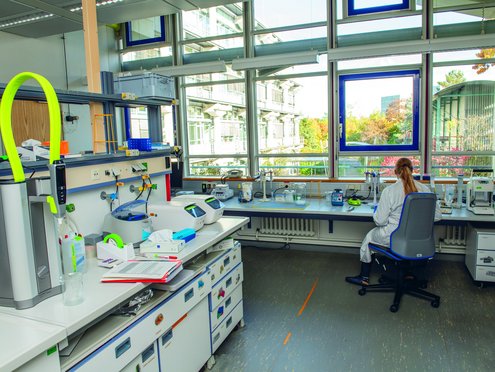
BfR laboratory
Copyright BfRshort forGerman Federal Institute for Risk Assessment

The monitoring of the outbreak conducted in the German federal states took place in close collaboration with the German Federal Office of Consumer Protection and Food Safety (BVLshort forGerman Federal Office of Consumer Protection and Food Safety), which is home to the point of contact for foodborne disease outbreaks. Outbreak analyses are typically initiated by and performed in cooperation with the Robert Koch Institute (RKI), which is tasked with preventing infectious diseases. 

The relevance of full genomic analysis in the context of foodborne infections is undeniable. Regarding the efficiency and the use advantages, however, there is still room for improvement. “We have to move beyond reactive outbreak analysis and get to a point of prospective analysis,” says Malorny.

“The idea is to, in the future, have a single database with all sequencing data – from food and feed and from sick people – which we can then routinely compare with each other. As soon as the comparison leads to a match, we will know where to take a closer look. Even before suspicion is raised. This way, outbreaks can be prevented or at least minimised.” 

This kind of national database is already being built, spearheaded by a federal and state working group led by the German Federal Ministry of Agriculture, Food and Regional Identity (BMLEH). The BfRshort forGerman Federal Institute for Risk Assessment, specifically the National Study Centre, is a part of this collaboration and is working to develop a tool for data collection and analysis. “We’ve discussed it all. Now we have to implement it.”

Current issue's highlights

Never miss an issue

The BfRshort forGerman Federal Institute for Risk Assessment science magazine BfR2GO is published twice a year. Subscribe for free.