60 μg
Girls/women/ pregnant women
BfR2GO 1/2026 was released in June 2026. The next issue will be published in December 2026. Internal Link:Subscribe

Selenium occurs in soils, rocks, and water. Because the human body cannot synthesise this essential mineral on its own, it must be consumed through food. However, supplementation is generally not necessary.
In Germany, the best sources of selenium are animal food products: fish, meat, sausage, or eggs. This is because selenium is also used as an additive for animal feed, as selenium is not only essential for humans, but for animal health as well. People following a plant-based diet can best consume their share of selenium through different cruciferous vegetables such as broccoli or white cabbage, as well as from bulb vegetables, mushrooms, asparagus, and pulses.
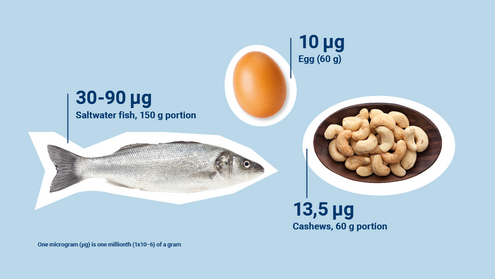
Reliable data on selenium intake among the general population is not available. However, there is no indication of clinically relevant symptoms of insufficient selenium supply in Germany.
(for persons from 15 years of age, *Source: The German Nutrition Society, DGE)
Selenium is an important component of certain proteins, named selenoproteins. These are involved in a variety of physical functions. For example:
If selenium intake is too low over a longer period of time, for instance due to an illness, the formation of selenoproteins can be disrupted. This may lead to impairments of the immune system or of muscle function. In case of a suspected selenium deficiency, consumers should, however, not begin taking selenium supplements on their own. Instead, they should consult their doctor. This is because too much selenium, after all, can also lead to health problems. An early sign of this is hair loss.
Consumption of food supplements with extremely high amounts of selenium or improper dosing (misuse) of supplements can also lead to acute poisoning. Possible symptoms include vomiting, respiratory, distress, cardiovascular problems, and in rare cases even organ failure.
Micronutrients and more
Which foods contain vitamins and essential minerals? Will I get sick if I consume too much or too little of them? Should I take food supplements to meet my body’s requirements, just in case? These types of questions are answered on www.microco.info/ en/vitamine-homepage.html, the information portal of the German Federal Institute for Risk Assessment (BfRshort forGerman Federal Institute for Risk Assessment). It provides information about micronutrients – vitamins and minerals – and explains their purpose in our bodies. There are also introductions to countless other substances which can be found in food supplements and enriched foods.
Check it out at: External Link:microco.info