87 of 92
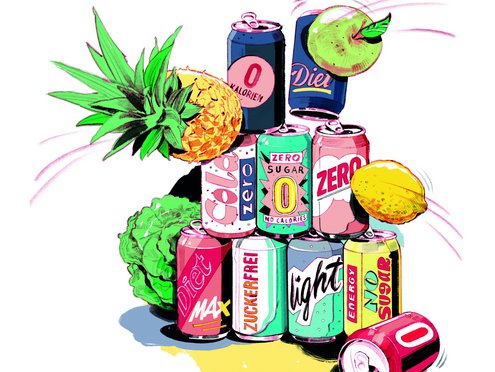
calorie-reduced soft drinks contain more than one sweetener. The levels vary greatly.
BfR2GO 1/2026 was released in June 2026. The next issue will be published in December 2026. Internal Link:Subscribe

Sweeteners are increasingly replacing sugar in processed foods. But do these sweet substances harbour health risks?
We are born with a taste for sweet things – even breastmilk is sweet. But in a society with constantly available calories, having a sweet tooth can become a challenge. Studies have linked “free sugars” to an increased risk for nutrition-related chronic diseases such as dental caries, obesity, and type 2 diabetes. The World Health Organisation (WHO) recommends reducing the intake of “free sugars” to less than 10 percent of one’s daily energy intake. For adults, this equates to no more than 50 grams per day. In Germany, the actual average intake is about 70 grams.
How can sugar intake be reduced? Mindful food choices can be a way to avoid sugar, but so can lowering levels of sugar in (processed) foods. In order to promote a healthy diet, the German Federal Government passed the “National Reduction and Innovation Strategy” (NRI) in 2018. The strategy involves food manufacturers committing themselves to reducing not only fats and salt, but also the amount of added sugar in their processed foods. Some companies have switched to relying more on sweetening substances, which provide almost no (low/no calorie sweeteners) or less calories (polyol reduced calorie sweeteners) (see box below).
Sweeteners are now present in many readyto- eat products. This includes everything from soft drinks to yoghurts and from cornflakes to ketchup. Among the broader public, these sugar alternatives are polarising. A survey by the German Federal Institute for Risk Assessment (BfRshort forGerman Federal Institute for Risk Assessment) found: 34 % of those surveyed consider sweeteners harmless, while 13 % find them very concerning.
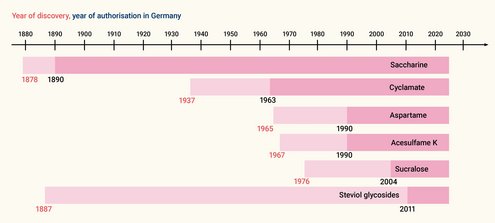
Currently, 21 sweeteners are allowed to be used within the European Union (EU). They have been subjected to safety assessments, are authorised, and must be listed in the list of ingredients on the product packaging (see box below). How does the scientific community go about conducting assessments for the effects of these substances on health?
“The crux of the matter is that the individual sweeteners have totally different chemical structures,” explains Dr Britta Nagl, who has been involved in the health risk assessment for sweeteners at the BfRshort forGerman Federal Institute for Risk Assessment. This means that they are not all metabolised in the same way. Some are not broken down at all, while others are broken down and processed by the body. Additionally, dietary studies pose a particular challenge: Human subjects are inherently opaque, and a wide variety of factors such as lack of physical activity, smoking, and genetics can also influence body weight and health. “In the end, it is almost impossible to determine actual causative relationships. Particularly, because usually there is a combination of many factors involved, and diseases often develop over years,” says Nagl.
For the BfRshort forGerman Federal Institute for Risk Assessment assessment, the nutritional scientist and her colleagues at the BfRshort forGerman Federal Institute for Risk Assessment spent months combing through hundreds of studies and analysing whether and how the extended and the combined use of low/no calorie sweeteners might affect the risk of obesity, diabetes, stroke or dementia. Another issue addressed was a potential negative effect on the gut microbiome. The researchers concentrated on the five most commonly used low/no calorie sweeteners sucralose, acesulfame K, saccharine, aspartame, and cyclamate.
One of the studied sweeteners has been a subject of criticism for many years. “A persistent discussion about aspartame and cancer has led to this sweetener being one of the best-studied sweeteners,” says Nagl. Scientific assessments performed by the BfRshort forGerman Federal Institute for Risk Assessment, the European Food Safety Authority (EFSAshort forEuropean Food Safety Authority), and other scientific institutions have so far not been able to confirm such a risk of cancer. Accordingly, the data assessed do not give rise to health concerns, as long as the acceptable daily intake (ADIshort forAcceptable Daily Intake) value is not exceeded.
Regarding sucralose, one thing should be borne in mind: If this sweetener, which has been authorised as safe, is heated to above 120° C, compounds with carcinogenic potential can be formed. Temperatures between 120° C and 150° C are possible in industrial food production and can also occur at home during baking, deep-frying or roasting. As of yet, there are not enough data to conduct a conclusive health risk assessment. Until these become available, the BfRshort forGerman Federal Institute for Risk Assessment recommends to not heat foods containing sucralose to such high temperatures.
As a rule, all sweeteners authorised in the EU are currently considered safe to health as long as the acceptable daily intake amount of the respective sweetener is not exceeded. This denotes the amount of a substance which can be consumed daily for a lifetime without health impairments being expected. As the world of science acquires new knowledge though further studies, systematic reassessments must be carried out regularly. Currently, there are ongoing EFSAshort forEuropean Food Safety Authority revisions for individual sweeteners.
A challenging aspect is that there are currently insufficient data regarding the total amounts of sweeteners consumed in Germany. There are only estimates based on a wealth of data on consumption amounts and sweetener levels of relevant foods.
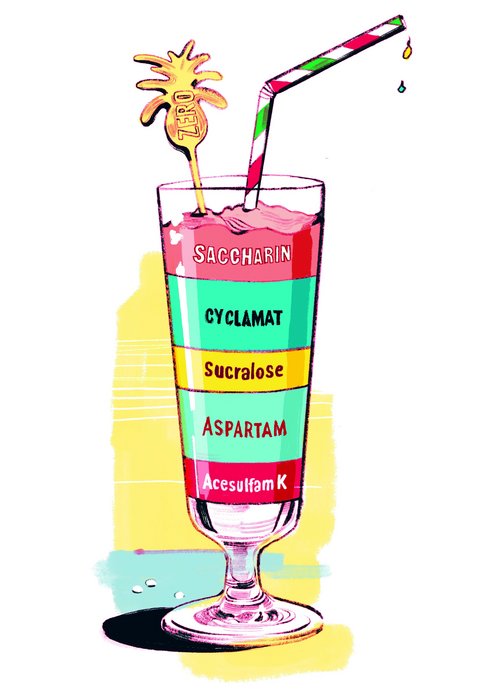
Additionally, sweeteners are often used in combination in order to improve sensory perception and achieve increased sweetness. For instance, saccharine is far sweeter than cyclamate, but has a metallic aftertaste, which can be reduced by cyclamate. Moreover, foods consumed may also contain different sweeteners. The BfRshort forGerman Federal Institute for Risk Assessment MEAL Study showed that the majority of the investigated soft drinks contained more than one low/no calorie sweetener.
The possible long-term effects of low/no calorie sweetener combinations have not yet been extensively researched. Theoretical considerations based on data from animal studies on individual low/no calorie sweeteners indicate that certain mixtures might lead to the occurrence of combination effects in the kidneys and urinary tract.
Due to the lack of robust studies, it is currently unclear how relevant possible combination effects may be for humans. International expert panels have thus not yet been able to consider this aspect in toxicological assessments and in the EU authorisation process.
It has been repeatedly called into question whether low/no calorie sweeteners really help with weight loss or if they may even cause the opposite. Under strictly controlled study conditions, research has shown that low/no calorie sweeteners used as sugar substitutes in foods and drinks can support weight reduction.
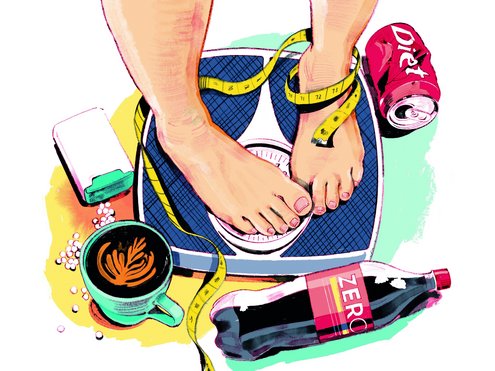
However, these studies were mainly conducted as part of intervention programmes for weight reduction with calorie-reduced diets and involved nutritional counselling. The results therefore do not allow conclusions to be drawn regarding the transferability of these effects under everyday conditions.
It seems like a paradox: Despite increasing numbers of sugar-reduced products, the number of overweight people is increasing. Low/no calorie sweeteners contain virtually no calories, so why doesn’t their us-age have an effect on this development?
“People who want to do something good for their health may want to be critical of their craving for sweet foods and gradually wean themselves off added sugar.”
Researchers are divided on whether low/no calorie sweeteners may have a long-term effect on appetite, metabolism, or energy balance. Data from animal studies can only be applied to humans to a limited extent and the available data from humans is limited. But there’s one thing that science knows: Sugar is only one of many factors that can influence the risk for becoming overweight.
Behaviour may be another factor. “People who consume calorie-free products may eat more of other things, thus negating the calorie-saving effect,” Nagl suspects. Lifestyle factors such as physical activity also play a role. Weight loss only works when more energy is expended than is consumed.
“People who really want to do some-thing good for their health should maintain an active lifestyle and follow a balanced and varied diet,” says Nagl. To achieve this, it may be helpful for people to be critical of their craving for sweet foods and to gradually wean themselves off added sugar. After all, “individual taste can be trained,” says Nagl.